GD&T Symbols & Definitions Guide (ASME Y14.5) — Quick Reference

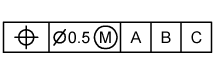
GD&T Reference Guide (ASME Y14.5) Geometric Dimensioning and Tolerancing symbols and definitions. 1. FORM (No Datums) Symbol Name & Definition Straightness: 2D straightness of a line element. Flatness: Surface must lie between two parallel planes. Circularity: Roundness of a 2D cross-section. Cylindricity: Roundness + Straightness of a 3D cylinder. 2. ORIENTATION (Datums Required) Symbol Name … Read more

Tolerance Stack-Up Analysis — Worst Case vs RSS (Statistical) Methods

What is Tolerance Stack-Up? When multiple parts assemble together, each dimension has a tolerance. Those tolerances accumulate. Tolerance stack-up analysis tells you whether your assembly will work — or whether you’ll be forcing parts together on the shop floor. There are two fundamental approaches: Worst Case (everything goes wrong simultaneously) and RSS/Statistical (realistic probability-based analysis). … Read more

GD&T Reference Guide — Geometric Dimensioning & Tolerancing (ASME Y14.5)

Geometric Dimensioning & Tolerancing (GD&T) GD&T is the language of engineering drawings. If you’re reading prints or designing parts, you need to understand these symbols. This reference covers the 14 geometric characteristic symbols defined in ASME Y14.5, with explanations and tolerance zone definitions. GD&T replaces ambiguous plus/minus tolerancing with precise geometric controls. Instead of saying … Read more

Surface Finish Guide for Machined Parts — Ra Values & Specifications

Why Surface Finish Matters Surface finish (or surface roughness) describes the texture of a machined surface. It affects sealing, wear, fatigue life, coating adhesion, and appearance. If you’re designing parts that mate, seal, or slide against each other, you need to specify surface finish on your drawing. Common Surface Finish Values Ra (µin) Ra (µm) … Read more